For years, Lyft has escaped responsibility for driver misconduct by using a single legal shield: the “Independent Contractor” defense. They argued that because drivers aren’t technically employees, Lyft isn’t liable for their crimes.
However, in February 2026, the establishment of MDL 3171 (In re: Lyft, Inc., Passenger Sexual Assault Litigation) and a landmark $8.5 million verdict against their main competitor have changed the rules. Courts are now looking past the “contractor” label to the economic reality of control.
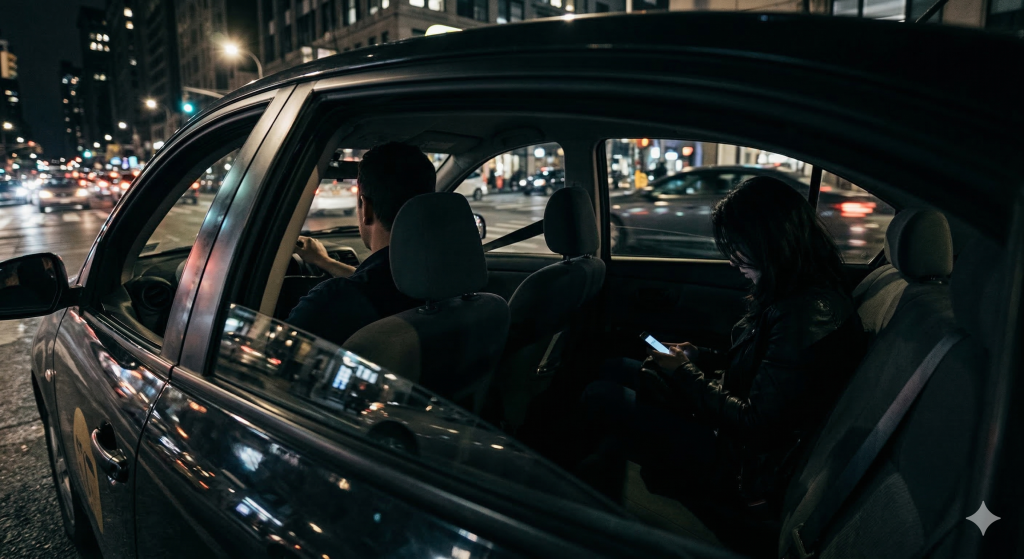
1. What is Vicarious Liability (Respondeat Superior)?
Under the doctrine of respondeat superior, an employer is liable for the wrongful acts of its agents if those acts occur within the “scope of employment.”
In 2026, proving this against Lyft requires showing that the company exercises substantial control over the driver’s work, making them “functionally indistinguishable” from an employee.
2. The 3 Pillars of Evidence in 2026
To win a settlement based on vicarious liability, your legal team will focus on these three elements:
A. The “Apparent Agency” Theory
This was the key to the February 2026 $8.5M verdict. If Lyft’s branding, safety promises, and app interface led you to reasonably believe that the driver was a vetted representative of the company, Lyft can be held liable.
- Evidence used: Lyft’s “Safety First” marketing campaigns and the fact that you cannot choose your own driver.
B. The “Manner and Means” of Control
Your attorney will argue that Lyft controls almost every aspect of the ride, including:
- Setting the specific route via GPS.
- Controlling the payment and fare structure.
- Mandating conduct policies and “Real-Time ID Checks.”
- Monitoring “long stops” or route deviations (and failing to intervene).
C. Ratification of Misconduct
If Lyft received a prior complaint about a driver’s sexual comments but allowed them to keep driving, they have “ratified” that driver’s behavior. In the 2026 MDL, discovery is revealing internal logs where Lyft ignored “red flags” to maintain driver supply.
3. Lyft’s Defense: The “Independent Contractor” Shield
Lyft still relies on state-specific laws (like Proposition 22 in California or Florida’s TNC Statute) to argue for immunity.
The 2026 Counter-Strategy: Lawyers are now arguing that sexual battery is a “foreseeable risk” of the rideshare business model. Because Lyft profits from putting strangers in a confined space, they have a non-delegable duty to ensure passenger safety, regardless of the driver’s tax status.
4. Why This Matters for Your Settlement Amount
Proving vicarious liability is the difference between a small claim and a life-changing recovery:
- Suing the Driver: Most drivers have limited insurance or no assets. Payouts are often capped at $25,000 – $50,000.
- Suing Lyft (Vicarious Liability): Lyft has a $1 Million+ liability insurance policy and billions in corporate assets. This allows for Tier 1 settlements ($1.5M – $3M+) for severe trauma.
5. How to Join the Lyft MDL 3171
The federal litigation is moving into its first “Discovery Conferences” in the Northern District of California under Judge Rita F. Lin.
If you were a victim of sexual battery, you don’t just have a case against a driver—you have a claim against the system that allowed them to be there.